
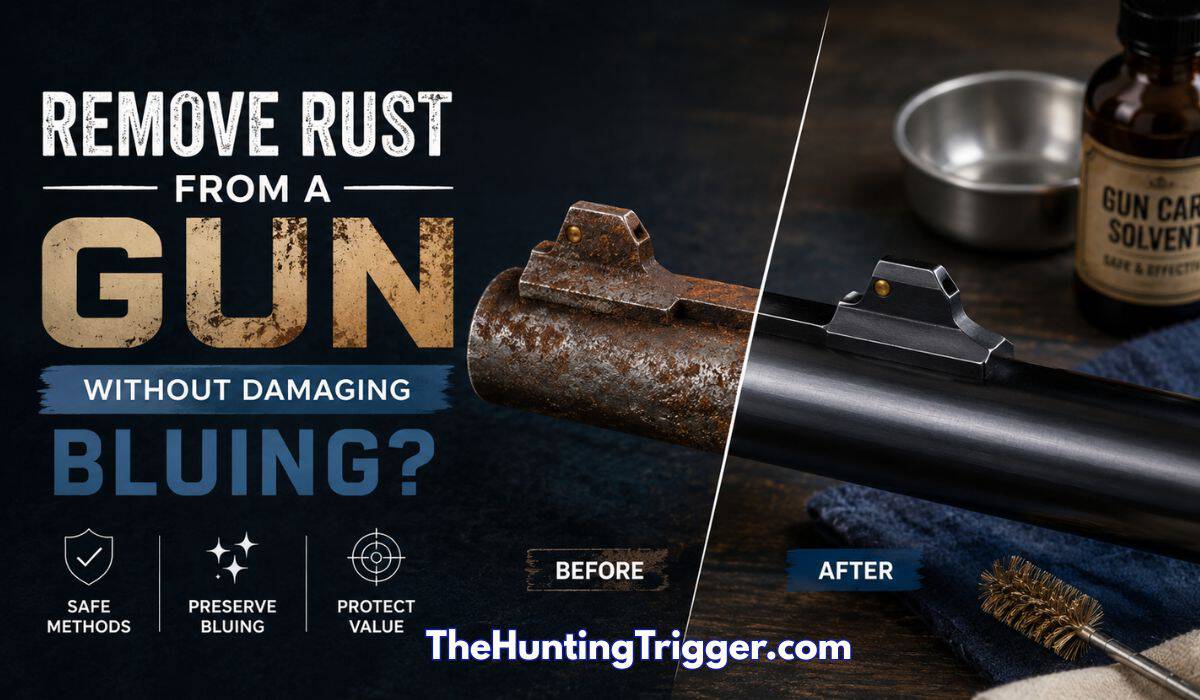
Removing rust from a gun without harming its bluing is a delicate job. Bluing is a thin, protective coating on steel firearms, giving them their signature dark color and helping prevent corrosion. Many gun owners worry that rust removal will strip away this finish, leaving the metal exposed and vulnerable.
The truth is, with the right tools and methods, you can clean away rust and keep your bluing intact. Let’s examine how to do this safely, why it matters, and what mistakes to avoid.
Table of Contents
Why Bluing Matters?
Bluing is more than just a cosmetic touch. The bluing process creates a layer of magnetite (Fe3O4) on steel, acting as a barrier against moisture and rust. Most guns, especially older models, rely heavily on this finish for protection. Damage to bluing means the steel underneath is exposed, increasing the risk of deeper corrosion and lowering the value of the firearm.
Statistics: According to the National Shooting Sports Foundation, rust is the top cause of cosmetic damage to firearms, and improper cleaning is the second most common reason for bluing loss.
Many collectors and hunters value the original bluing, not just for looks but for its historical importance. If a gun loses its bluing, it often loses resale value. Even small scratches or patches can make a difference. For example, a vintage revolver with intact bluing will usually sell for more than one with worn spots, even if both work perfectly.
Bluing also helps prevent fingerprints from causing rust, so even handling a gun carefully is part of protecting it.
How Rust Forms On Guns?
Rust, or iron oxide, develops when moisture and oxygen react with steel. Guns are prone to rust due to:
- High humidity
- Sweaty hands
- Storage in damp places
- Exposure to rain or water
Even guns stored indoors can rust if not maintained well. Small reddish-brown spots are the first signs, but if ignored, rust can spread quickly, eating away at both metal and bluing.
It’s easy to underestimate how quickly rust forms. For example, if you handle your gun with sweaty hands and then store it without cleaning, rust can appear in just a few days, especially in humid climates. Sometimes, people notice rust only after a gun has been stored for a long time.
Pay attention to hidden spots—under grips, inside triggers, or near screws—because these areas often collect moisture and are missed during regular cleaning.
Safe Rust Removal Methods
The challenge is to remove rust without abrading or dissolving the bluing. Here are proven ways, ranked from least to most aggressive.
| Method | Effectiveness | Risk to Bluing |
|---|---|---|
| Oil and Cloth | Low (for mild rust) | None |
| Fine Steel Wool (0000) | Medium | Low |
| Bronze Brush | Medium | Low |
| Commercial Rust Remover | High | Medium |
Oil And Cloth
For light surface rust, soak a soft cloth in gun oil or CLP (Cleaner Lubricant Protectant). Rub gently in circles. This loosens rust and lifts it away without affecting the bluing. Repeat as needed.
A practical tip: use microfiber cloths instead of ordinary rags. Microfiber grabs fine particles better and is less likely to scratch the bluing. For very light rust, sometimes all you need is patience. Let the oil soak longer, then wipe and check. If the rust is gone, you have protected your bluing.
Fine Steel Wool (0000 Grade)
0000 steel wool is soft enough to avoid scratching bluing, but tough enough for light rust. Apply gun oil to the wool and gently buff the rusty area. Do not press hard. Wipe away debris, then reapply oil to finish. This method is safe for most mild rust spots.
Some people fear steel wool, but 0000 grade is made for polishing. Always work slowly. If you notice the bluing getting lighter, stop immediately. Beginners sometimes miss that steel wool can flatten sharp edges if used too much—so avoid using it near markings or engraved parts.
For extra safety, cut the wool into small pads, so you can control the area you clean.
Bronze Brush
A bronze brush is softer than steel, making it ideal for stubborn rust. Dip the brush in oil and stroke along the grain of the metal. Bronze bristles remove rust without scraping the bluing layer. Avoid over-brushing in one spot.
Bronze brushes also help reach tight corners where rust hides. For example, around trigger guards or along the barrel. If the rust is deeper, you can combine the bronze brush with oil and a soft cloth for finishing. Always inspect as you work—sometimes rust is only on the surface, but aggressive brushing can remove bluing from raised edges.
Commercial Rust Removers
There are products made for firearms, such as Birchwood Casey’s Blue & Rust Remover. Apply as instructed, but test first on a small area. These chemicals can remove both rust and bluing if used too long. Use sparingly and only when manual methods fail.
Read instructions carefully, and never let chemicals sit longer than recommended. If you notice the bluing color fading, rinse immediately. For collectors, chemical removers should be a last resort. Always check if the product is marked “safe for blued steel.
” Some general rust removers are too harsh.
What To Avoid?
Some common mistakes can ruin bluing and even the gun itself.
| Mistake | Effect | Better Alternative |
|---|---|---|
| Using sandpaper | Removes bluing and scratches steel | 0000 steel wool |
| Harsh chemicals | Dissolves bluing and leaves metal exposed | Gun oil or CLP |
| Wire brush (steel) | Scratches both bluing and steel | Bronze brush |
One mistake beginners make is trying to speed up cleaning by using abrasive pads or household cleaners. Many of these products are designed for sinks or tools, not firearms. Even a single pass with sandpaper can leave permanent scratches. If you accidentally use a harsh chemical, rinse the area with water and oil it quickly.
Another often-overlooked mistake is using paper towels. While they seem soft, some brands contain tiny wood fibers that can scratch bluing. Stick with cloth or microfiber.
Step-by-step Process For Removing Rust
Preparation
- Unload the gun. Safety first: Check the chamber and remove any ammunition.
- Disassemble as needed. Remove parts that block access to rusty areas. Do not fully strip the gun unless you know how.
- Work in a well-lit space so you can see small spots.
If you’re unsure about disassembly, consult your gun’s manual. For basic cleaning, often you only need to remove the grips or open the action. Keep small parts organized—using a tray or mat helps.
Cleaning
- Apply oil. Use gun oil or CLP. Let it soak for 10–20 minutes on rusty spots.
- Rub with cloth. Try to remove loose rust first.
- Use 0000 steel wool. Apply oil and rub gently in circles. Do not press hard.
- Brush with bronze. For deeper rust, use a bronze brush dipped in oil.
- Wipe clean. Use a fresh cloth to remove all residue.
If you find rust under parts, clean those areas before reassembling. If the rust is stubborn, repeat oil application and rubbing. Sometimes, multiple short sessions work better than one long, aggressive cleaning.
Optional: Chemical Rust Remover
If rust persists, use a firearm-safe chemical remover. Apply as directed, watching carefully so you don’t strip the bluing. Rinse and dry immediately after.
Chemical removers are useful for deep rust but require close attention. Wear gloves, and ventilate your workspace. If you see bubbles or changes in color, stop and rinse.
Final Steps
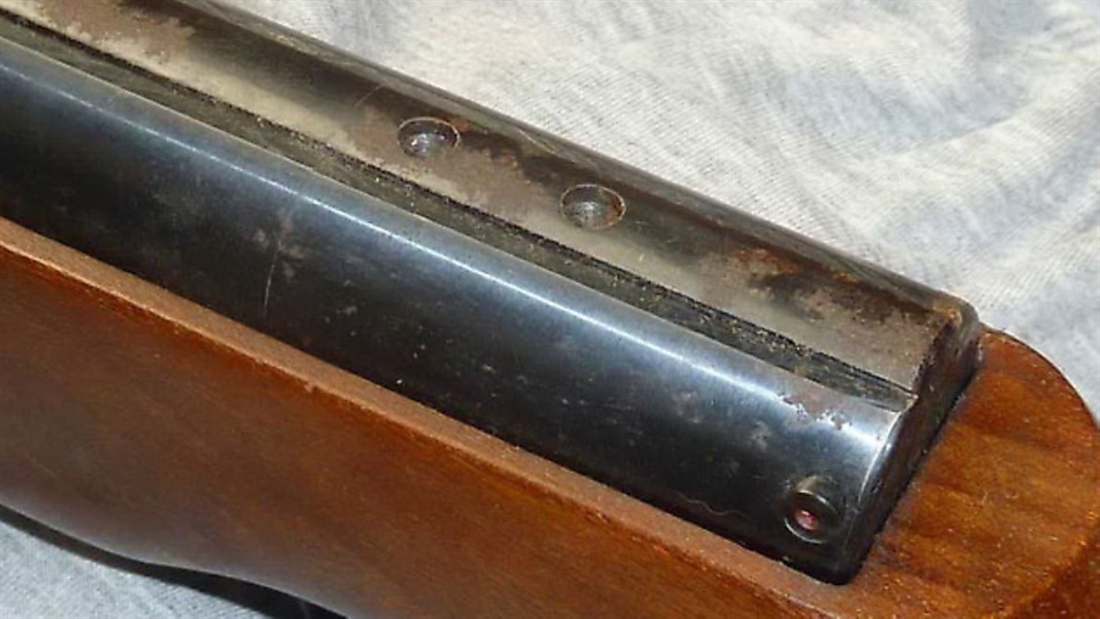
- Inspect for bluing loss. If areas look gray or bare, bluing may be gone. Touch-up kits exist, but results vary.
- Apply oil. Coat all cleaned surfaces to protect from future rust.
- Reassemble the gun and store properly.
If you notice any bare metal, consider using a bluing pen or touch-up kit. While not perfect, these can hide small spots and add some protection. After cleaning, always check that moving parts work smoothly—sometimes oil can seep into areas and affect function.
Practical Tips For Protecting Bluing
Even after cleaning, prevention is key.
- Store in dry places. Use gun safes with dehumidifiers.
- Handle with clean hands. Oil and sweat speed up rust.
- Regular maintenance. Wipe down after each use, especially in humid climates.
- Avoid over-cleaning. Too much scrubbing wears down bluing.
Non-obvious tip: If you live in a humid area, silica gel packs inside the gun safe can absorb moisture and reduce rust risk.
Another smart tip: rotate guns in your safe. If a firearm sits untouched for months, moisture can collect in certain spots. By moving guns and inspecting them regularly, you catch problems early.
For hunters, after trips in wet weather, always clean and oil your gun before storage. Even if rust is not visible, moisture can hide inside.
Comparing Popular Rust Removal Products
Here’s how three common products for gun rust removal stack up.
| Product | Type | Effect on Bluing | Ease of Use | Price (USD) |
|---|---|---|---|---|
| Birchwood Casey Blue & Rust Remover | Chemical | Medium risk | Easy | 7–10 |
| CLP (Break-Free) | Oil | Safe | Very easy | 8–12 |
| WD-40 | Oil | Low risk | Easy | 5–8 |
Non-obvious insight: While WD-40 is popular, it’s not designed for guns and can leave residues. Dedicated gun oils are safer and do a better job of preserving bluing.
If you’re shopping for rust removers, check product reviews—some brands work better on heavy rust, others are best for maintenance. Avoid products with unknown ingredients.
How Often Should You Clean For Rust?
There’s no one-size-fits-all answer. Guns in humid climates or used often need weekly checks. For firearms stored in controlled environments, monthly is enough. After exposure to rain or sweat, clean immediately.
A helpful practice: set reminders on your phone or calendar to check your guns. Many owners forget until they see damage. Prevention is easier than repair.

Re-bluing: When Is It Needed?
If rust has removed patches of bluing, re-bluing may be necessary. This is a specialized process, often done by gunsmiths. Home kits exist, but results can be uneven. Only attempt if you’re comfortable with careful chemical handling and are not concerned about collector value.
Some shooters try cold bluing kits for small repairs. These work for minor spots but can look different from factory bluing. For large areas or valuable guns, professional hot bluing is safer. It’s wise to ask a gunsmith for advice if you’re unsure.
Expert Advice
Many professionals recommend routine oiling and gentle cleaning as the best way to preserve bluing. It’s better to prevent rust than fix it after the fact. Guns with heavy pitting or deep rust may need professional attention.
An experienced gunsmith will also check for hidden rust inside actions or under grips. If you have doubts about your cleaning method, take the gun to a professional rather than risk damaging the bluing.
Frequently Asked Questions
How Do I Know If My Gun’s Bluing Is Damaged?
If the surface looks dull, gray, or has bare metal showing, bluing may be worn away. Compare with areas that are still shiny and dark. Sometimes small patches are hard to see; bright light helps.
Can I Use Vinegar To Remove Rust From A Gun?
Vinegar is acidic and can dissolve both rust and bluing. It’s not recommended for firearms unless you plan to re-blue after. Stick to gun-specific oils and brushes.
Is Wd-40 Safe For Removing Rust On Guns?
WD-40 works for light rust but isn’t a true gun oil. It can leave residues that attract dust. Use it only if you don’t have gun oil, and clean thoroughly afterward.
What’s The Best Way To Prevent Rust On Guns?
Store firearms in dry places, use silica gel packs, wipe down after handling, and apply gun oil regularly. Avoid touching metal parts with sweaty hands.
Can I Re-blue My Gun At Home?
Home re-bluing kits exist, but results depend on careful preparation and application. For valuable or collector guns, professional bluing is safer and gives better results.
Last Word
Removing rust from a gun without harming the bluing is possible with patience and the right tools. Avoid harsh abrasives and chemicals, and focus on gentle methods like oil, soft cloths, and fine steel wool. Protect your firearm with regular care and dry storage.

Leave a Reply