
Keeping your rifle scope lens clean is more than just about good looks—it’s about accuracy, safety, and the life of your gear. Dust, fingerprints, and moisture can reduce image quality, cause glare, or even damage the lens coating. For hunters, sports shooters, or tactical users, a dirty scope can mean the difference between a clear shot and a missed opportunity.
Many beginners use the wrong materials or methods, risking scratches or permanent damage. Cleaning a rifle scope lens the right way is not complicated, but it does require some care and the correct steps.
Table of Contents
Why Clean Your Rifle Scope Lens?
A clean lens allows light to pass through without distortion. Even a thin layer of dust or oil can change how you see your target. Over time, dirt can scratch the lens coatings, which are there to improve clarity and reduce reflection. If neglected, a dirty scope can become unusable, forcing you to replace an expensive part. Regular cleaning also helps prevent mold or fungus, which can grow in humid conditions.
Understanding Rifle Scope Lens Coatings
Modern rifle scopes often have special coatings to improve light transmission and protect the lens. These coatings are very thin and can be damaged by harsh chemicals or abrasive materials. There are several types:
| Coating Type | Benefit | Cleaning Sensitivity |
|---|---|---|
| Single-coated | Basic reflection reduction | Moderate |
| Fully multi-coated | Maximum clarity and brightness | High—very sensitive to harsh cleaning |
| Hydrophobic | Repels water and oil | More resistant, but still needs care |
When you clean, always assume your lens has a delicate coating. Using the wrong product can remove or damage these layers, which cannot be fixed easily.
Essential Tools For Cleaning Rifle Scope Lenses
You don’t need a big investment, but using the right tools matters. Here’s what you should have ready:
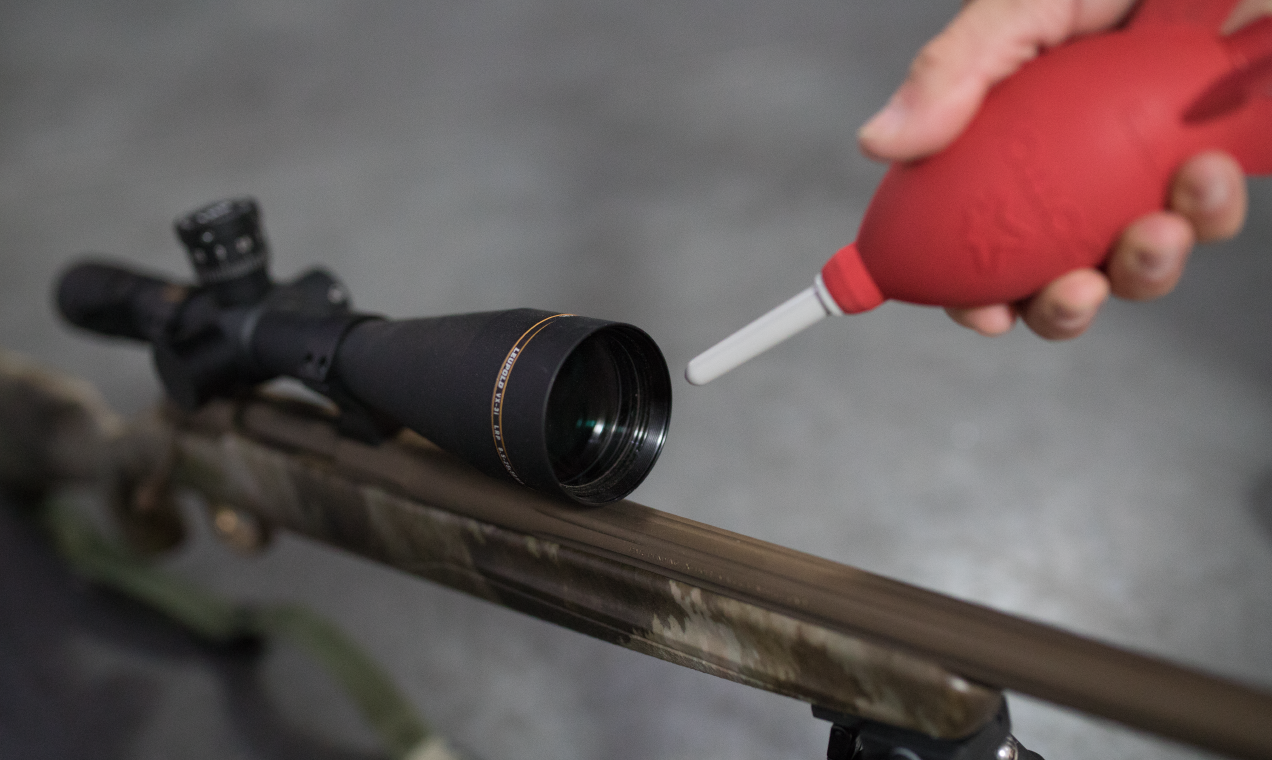
- Lens blower or air bulb: Removes loose dust and grit without touching the lens.
- Soft lens brush: For gently sweeping away particles after blowing.
- Microfiber cloth: Specially designed to clean lenses without scratching.
- Lens cleaning solution: Alcohol-free, made for optics.
- Lens cleaning pen: Double-ended, with a soft brush and a cleaning tip.
- Cotton swabs: Useful for cleaning lens edges and tight spots.
Avoid using your shirt, paper towels, or tissues—they can scratch the lens or leave lint. Never use household glass cleaners, as they can strip coatings or leave residue.
Step-by-step Guide: How To Clean Your Rifle Scope Lens
1. Check Your Work Area
Choose a clean, dust-free place with good light. Avoid windy or outdoor spots, as new dust can settle while you clean. Lay down a soft cloth to protect the scope if you need to set it down.
2. Remove Loose Particles
Use a lens blower or air bulb to blow away dust and grit from the lens surface. Hold the scope so particles fall off, not into the scope body. Do not blow with your mouth; saliva drops can damage the lens.
3. Use A Soft Brush
Gently sweep the lens with a soft lens brush. Move in small circles, working from the center outwards. This helps lift any remaining particles without scratching.
4. Apply Cleaning Solution
Add a few drops of lens cleaning solution to a microfiber cloth—not directly on the lens. Wipe the lens in a slow, circular motion. Never use strong solvents, as they can damage coatings.
5. Clean Around The Edges
For the lens edge and tight spots, use a cotton swab lightly moistened with lens solution. Be careful not to touch the swab’s stick to the glass, as it can be abrasive.
6. Polish With Microfiber Cloth
Use a clean, dry microfiber cloth to gently polish the lens. Avoid pressing too hard—let the cloth do the work. Check the lens for streaks or smudges; repeat with a clean area of the cloth if needed.
7. Inspect And Repeat If Needed
Hold the scope at different angles to the light. This helps you spot any missed spots or streaks. Repeat steps if you still see residue, but avoid over-cleaning.
8. Protect Your Scope
When finished, replace lens covers immediately. Store your scope in a dry, padded case to prevent dust and moisture build-up.
What To Avoid When Cleaning Scope Lenses
It’s easy to make mistakes that can ruin your expensive optics. Here are common errors:
- Using rough materials like paper towels, napkins, or your shirt.
- Applying too much pressure when wiping.
- Using household cleaners (Windex, vinegar, etc. ).
- Cleaning too often—only clean when needed, as over-cleaning can wear down coatings.
- Skipping the blower/brush step and going straight to wiping.
Many beginners forget that even a tiny scratch can affect accuracy. Always treat the lens as the most sensitive part of your rifle.
Comparing Cleaning Methods
Different products offer different benefits. Here’s a quick look at common cleaning tools:
| Tool | Pros | Cons | Best Use |
|---|---|---|---|
| Microfiber cloth | Gentle, reusable, no lint | Needs to be kept clean | General cleaning |
| Lens cleaning pen | Portable, easy to use | Tip must be replaced eventually | Field cleaning |
| Lens blower | No contact, safe for coatings | Does not remove oils | First step, loose dust |
A smart cleaning routine usually combines these tools for the best results.
How Often Should You Clean Your Rifle Scope Lens?
Many new shooters think cleaning should be done after every use, but that’s not true. Excessive cleaning can actually wear out lens coatings. Instead, inspect your lens after each use and clean only when you see dust, fingerprints, water spots, or smudges.
If you shoot in wet or dusty conditions, check your lens more often. Always clean before storing for a long time, as dust or moisture can become harder to remove over time.
Practical Tips For Long-term Lens Care
- Use lens covers whenever the scope is not in use. This prevents most dust and fingerprints.
- Carry a lens pen and microfiber cloth in your shooting bag for field emergencies.
- Store scopes in a dry, padded case with silica gel packs to absorb moisture.
- Never touch the lens with your fingers. Even clean hands leave oils.
- Replace cleaning cloths often. Dirty cloths can scratch or smear the lens.
A non-obvious tip: If you shoot in rain or snow, gently shake off water drops first and let the lens air dry before wiping. Wiping wet lenses can grind dirt into the coating.

Signs Your Scope Lens Needs Professional Help
Sometimes, cleaning at home isn’t enough. Watch for these signs:
- Persistent smudges that don’t come off with proper cleaning
- Scratches or chips on the glass
- Fogging or mold inside the lens
- Loose or damaged lens covers
If you see any of these, contact the manufacturer or a qualified optics repair shop. Do not try to open the scope yourself—internal lenses are easily damaged and difficult to realign.
Common Myths About Cleaning Rifle Scope Lenses
Many shooters hear advice that sounds good but can harm your optics. Here are some myths:
- “Any glass cleaner is fine.” False—most have ammonia or other chemicals that ruin coatings.
- “You can use your T-shirt in an emergency.” Wrong—fabric fibers and sweat can scratch and smear.
- “More cleaning is better.” Not true—clean only when needed, as too much cleaning wears the lens.
- “Compressed air cans are best.” No—they can spit propellant or moisture onto your lens.
Always choose products made for optical lenses. If in doubt, read your scope’s manual or check with the maker.
Environmental Factors Affecting Your Scope Lens
Where and how you shoot affects how often and how carefully you need to clean:
| Environment | Common Issues | Cleaning Frequency |
|---|---|---|
| Desert/dusty | Sand, dust, grit | Check after every use |
| Rainforest/humid | Mold, water spots | Clean and dry after every outing |
| Snow/cold | Condensation, frost | Let lens warm up before cleaning |
Understanding your shooting environment helps you plan the right cleaning routine and avoid unexpected damage.
Frequently Asked Questions
What Should I Do If My Lens Gets Scratched?
If your scope lens is scratched, do not try to polish it yourself. Most home remedies will make it worse. If the scratch affects your view or accuracy, contact a professional optics repair service.
Can I Use Eyeglass Cleaning Wipes On My Rifle Scope Lens?
Some eyeglass wipes are safe, but many contain chemicals that can harm lens coatings. Only use wipes that are labeled as safe for coated optics. Always read the label and test on a small area first.
Why Do I Need A Special Cleaning Solution For Scope Lenses?
Rifle scope lenses have delicate coatings that can be damaged by regular glass cleaners, which often contain ammonia or alcohol. Use solutions made for camera lenses or scopes to protect these coatings.
How Do I Prevent Fogging On My Scope Lens?
To prevent fogging, keep your scope dry and store it with silica gel packs. Some scopes have fog-proofing built in, but moisture can still get on external surfaces. Wipe off water drops and avoid breathing directly on the lens.
Is It Safe To Use A Lens Cleaning Pen In The Field?
Yes, a lens cleaning pen is designed for field use. Keep the brush clean by retracting it after use, and replace the pen when the cleaning pad wears out. It’s a good emergency tool but should not replace full cleaning at home.
Lastly
Caring for your rifle scope lens is an important part of owning and using quality optics. With the right tools and steps, your scope will provide clear, sharp views for years. For more on optics care and products, check out the guidance from ZEISS, a leader in precision optics. Remember, a little attention now can save you the cost and frustration of damaged gear later.


Leave a Reply