If you enjoy shooting sports, hunting, or long-range target practice, you know how important accuracy is. Even if you have a high-quality rifle and scope, your shots can miss the mark if your parallax is not adjusted correctly. Parallax errors are a hidden cause of missed shots, and many shooters—even experienced ones—struggle to adjust parallax on a rifle scope the right way. Understanding this skill can make your shooting more precise and help you avoid the frustration of unexplained misses.
This guide will help you learn how to adjust parallax on a rifle scope step by step. You’ll discover what parallax is, why it matters, and how to fix it for different distances. We’ll also look at common mistakes, advanced tips, and answer the most frequent questions about scope parallax.
If you want to shoot tighter groups and get the most out of your rifle scope, keep reading.
Table of Contents
What Is Parallax On A Rifle Scope?
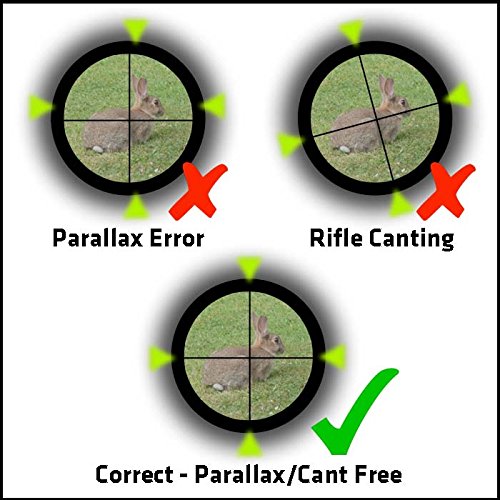
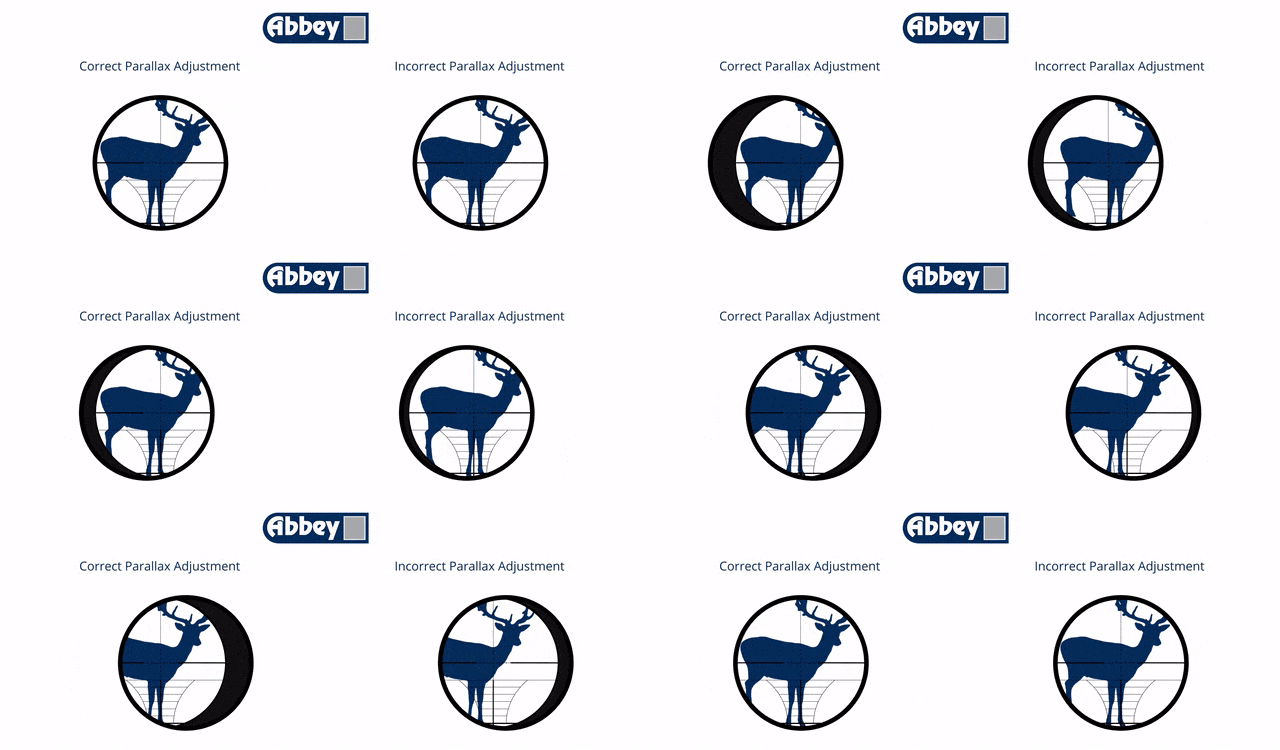
Parallax happens when the target image and the scope’s reticle (the crosshairs) are not on the same optical plane. This means, when you move your head behind the scope, the reticle seems to move against the target. If your eye is not in the exact same place for every shot, this can cause your point of impact to change. The farther the target, the more parallax becomes a problem.
Most modern rifle scopes come with either a fixed parallax (usually set at 100 yards/meters) or an adjustable parallax (often called side focus or adjustable objective). If you want precise shooting, especially at different distances, knowing how to adjust parallax is essential.
Why Is Parallax Adjustment Important?
Parallax errors usually cause missed shots, especially at longer distances. Here are key reasons why adjusting parallax matters:
- Better accuracy: Removes aiming errors from head movement.
- Consistent shots: Your point of impact stays the same, even if your cheek position changes.
- Easier target tracking: The reticle stays fixed on the target, even if you shift your eye slightly.
- Reduces eye strain: Less strain when focusing on the target for long periods.
Many shooters do not realize how often parallax error affects their results. Even small mistakes can move a bullet off target by several inches at 300 yards or more.
How Parallax Adjustment Works
Parallax adjustment changes the focus of the target image so it matches the reticle’s plane inside the scope. When these two are aligned, moving your eye does not move the crosshair on the target. This is called being “parallax free” for that distance.
There are two main ways rifle scopes let you adjust parallax:
- Adjustable Objective (AO) ring: Found on the front (objective) end of some scopes. You turn the ring to match the target distance.
- Side focus knob: Located on the left side of the scope body. Easier to reach and use while aiming.
Some scopes have a fixed parallax set for a certain range, often 100 yards for hunting scopes or 50 yards for air rifles. These cannot be adjusted without special tools.
Step-by-step: How To Adjust Parallax On A Rifle Scope
Let’s go through the adjustment process as a practical shooter would in the field or at the range.
1. Set Up Your Rifle
- Place your rifle on a stable rest or bipod.
- Make sure the scope is mounted correctly and all screws are tight.
- Choose a target at the distance you want to shoot (for example, 100 yards).
2. Check Your Scope’s Parallax Controls
- Find out if your scope uses a side focus knob or adjustable objective ring.
- Check the markings; most have yardage numbers to help you start.
3. Start With The Estimated Distance
- Turn the adjustment to the distance you think your target is at (for example, “100” for 100 yards).
- Do not trust the numbers too much—they are a starting point, not exact.
4. Focus The Reticle
- Look through the scope and adjust the eyepiece (ocular lens) until the crosshairs are sharp and black.
- This is a one-time setup for your eyes and not part of parallax adjustment, but it helps prevent confusion.
5. Check For Parallax Error
- Aim at the center of your target.
- Without moving the rifle, shift your head slightly up/down and left/right.
- Watch if the crosshairs seem to move off the target.
6. Fine-tune The Parallax Adjustment
- If the reticle moves against the target, slowly turn the parallax knob or ring until the movement disappears.
- When you move your head and the crosshairs stay perfectly on the target, parallax is removed for that distance.
7. Confirm And Shoot
- Repeat the head movement test once more.
- If everything is stable, take your shot with full confidence.
- If not, repeat the adjustment until you are sure.
8. Repeat For Different Distances
- Every time you change target distance, repeat this process.
- Even small changes (from 100 to 150 yards) can introduce parallax error.
Examples And Practical Tips
Let’s consider a practical example. If you are shooting at 300 yards with a scope set for 100 yards, your bullet can hit as much as 2-3 inches off target due to parallax error. That’s enough to miss a small game animal or a bullseye.
Here are some extra tips that beginners often miss:
- Do not rely only on distance markings. Even high-end scopes can have slight errors in the numbers. Always check by moving your head and watching the reticle.
- Parallax adjustment is not the same as focus. The side focus or AO ring aligns the image and reticle, but the eyepiece focus only sharpens the crosshair for your eye.
- Temperature and light can affect parallax. Extreme heat or low light can make parallax errors more visible, so check it often.
Fixed Parallax Vs. Adjustable Parallax Scopes
To make things clearer, here’s a comparison of fixed parallax and adjustable parallax scopes:
| Feature | Fixed Parallax Scope | Adjustable Parallax Scope |
|---|---|---|
| Parallax Distance | Usually 50 or 100 yards | Can set for any distance (often 10 yds to infinity) |
| Ease of Use | Simpler, less to adjust | Requires adjustment for each distance |
| Accuracy at Long Range | Lower, more error risk | Higher, less error |
| Cost | Usually cheaper | Usually more expensive |
| Best For | Short-range, hunting | Target shooting, long-range, varmint hunting |
For hunting at typical ranges (100 yards or less), a fixed parallax scope may be enough. For shooting at different or longer ranges, adjustable parallax is much better.
Common Mistakes When Adjusting Parallax
Many shooters make the same errors. Here’s what to watch for:
- Ignoring the parallax adjustment: Some think it’s not important, especially at short range. But even at 50 yards, a slight error can throw off a precise shot.
- Confusing focus and parallax: Adjusting the eyepiece does not remove parallax. Always use the right control.
- Rushing the process: It takes a few seconds to check for reticle movement with your head. Do not skip this step.
- Trusting distance markings too much: Always verify with the head movement test, not just the numbers.
- Not adjusting for each new target distance: Parallax must be checked every time your range changes.
How To Test For Parallax Error
Here’s a simple way to test if you have parallax error:
- Set up your rifle on a rest.
- Aim at a small, clear target.
- Move your head slightly while keeping the rifle still.
- If the crosshairs move off the target, you have parallax error.
- Adjust the parallax control until the crosshairs stay on the same spot, no matter where your eye is.
This test should be done at every new shooting distance.

Advanced Tips For Perfect Parallax Adjustment
If you want to get even better, here are advanced tips that many shooters overlook:
- Use a small, high-contrast target: A black dot or white sticker helps you see crosshair movement more clearly.
- Adjust in small steps: Tiny turns of the knob or ring can make a big difference, especially at long range.
- Check after every shot string: If you shoot many rounds in a row, check parallax again. Heat from the barrel can cause minor shifts.
- Record your settings: Write down the knob or ring position for your favorite distances. This helps you return quickly in competitions.
Comparison Of Parallax Adjustment Locations
Let’s compare the two most common adjustment designs:
| Adjustment Location | Pros | Cons |
|---|---|---|
| Side Focus Knob | Easy to reach; can adjust while aiming; more common on modern scopes | Can add weight; sometimes less precise on cheaper models |
| Adjustable Objective Ring | Usually more precise; lighter; found on some high-end target scopes | Harder to adjust quickly; need to reach forward |
Choose the one that fits your shooting style. For hunting, side focus is often easier. For benchrest target shooting, an AO ring may give finer control.
How Parallax Affects Different Shooting Situations
Here’s how parallax plays a role in different scenarios:
- Air Rifle Shooting: Air rifles often use scopes with parallax set at 10–50 yards. Small errors matter more because targets are tiny.
- Long-Range Shooting: At 500 yards or more, even a 1mm eye movement can shift the bullet’s impact by several inches.
- Hunting: Quick shots at changing distances need fast parallax checks. A fixed parallax can be risky if the animal is far away.
- Tactical/Competition: Many competitions use targets at unknown ranges. Fast, accurate parallax adjustment is a must for top scores.
Parallax And Reticle Types
Some reticles are more sensitive to parallax errors than others. For example, thin crosshairs make movement easier to see, while thick, hunting-style reticles may hide small shifts. Illuminated reticles do not change parallax, but they can help you see the crosshair better in low light.
When Parallax Adjustment Is Not Needed
Not every shooter needs to adjust parallax for every shot:
- At fixed, short ranges (like rimfire matches at 50 yards)
- When using a scope with a fixed parallax set for your usual distance
- For fast, close-range hunting shots
But for all other situations, especially when accuracy matters, always check your parallax.
Common Parallax Adjustment Ranges
Here’s a quick summary of typical parallax ranges by scope type:
| Scope Type | Common Parallax Range |
|---|---|
| Hunting Scope | Fixed at 100 yards |
| Varmint/Target Scope | Adjustable from 10 yards to infinity |
| Air Rifle Scope | Fixed at 50 yards or adjustable from 10–50 yards |
| Tactical/Long-Range Scope | Adjustable from 25 yards to infinity |
Always check your manual for the exact range.
Frequently Asked Questions
What Is The Difference Between Parallax And Focus On A Rifle Scope?
Parallax is about aligning the reticle and target image on the same plane to prevent aiming errors from eye movement. Focus is simply making the crosshairs clear for your eye. You must adjust both for best accuracy.
Can I Shoot Accurately Without Adjusting Parallax?
You can shoot at short, fixed ranges with a fixed parallax scope, but at longer distances or varying ranges, you risk missing due to parallax error. For best results, always adjust parallax when possible.
How Do I Know If My Scope Has Parallax Adjustment?
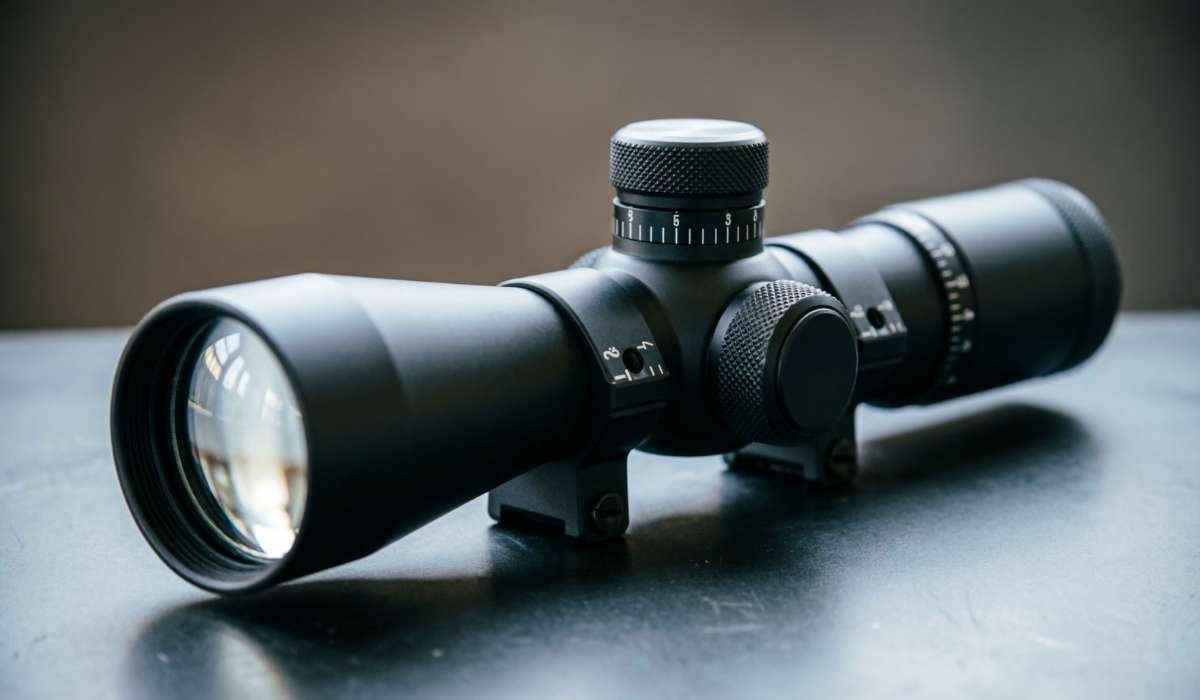
Look for a side focus knob on the left of the scope or an adjustable ring near the objective lens. If you see distance markings (like 50, 100, 200, ∞), your scope has adjustable parallax. Check your manual to be sure.
Does Parallax Adjustment Work For All Types Of Shooting?
Parallax adjustment is most important for target shooting, long-range shooting, and precision hunting. For fast, close-range shots (like bird hunting), it’s less critical.
Lastly
Getting parallax right is one of those small skills that separates average shooters from true marksmen. With practice, adjusting parallax becomes quick and automatic, leading to more hits and better results every time you pull the trigger.

Leave a Reply